
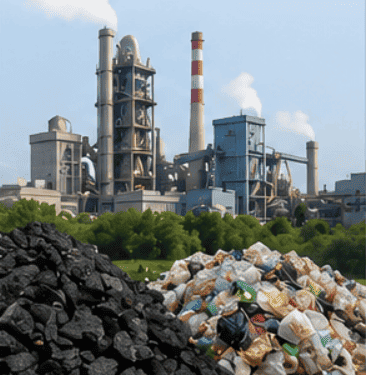
Tanto el RDF (combustible derivado de residuos) como el carbón se utilizan ampliamente como combustibles industriales, pero difieren significativamente en cuanto a su origen, impacto medioambiental, poder calorífico y sostenibilidad. El carbón suele ofrecer un poder calorífico mayor y más estable, mientras que el RDF genera menos emisiones de carbono, reduce los residuos que van a parar a los vertederos y contribuye a los objetivos de la economía circular. Para las cementeras, las centrales eléctricas y las calderas industriales que buscan combustibles alternativos, el RDF puede sustituir parcialmente al carbón y contribuir a reducir los costes de combustible y el impacto medioambiental.
Introducción
Las instalaciones industriales de todo el mundo se ven sometidas a una presión cada vez mayor para reducir las emisiones de carbono y mejorar la eficiencia en el uso de los recursos.
Como consecuencia, muchos sectores están estudiando combustibles alternativos que puedan sustituir a los combustibles fósiles tradicionales, como el carbón.
Entre estas alternativas, el RDF se ha consolidado como una solución práctica para las aplicaciones de valorización energética de residuos.
¿Qué es el combustible RDF?
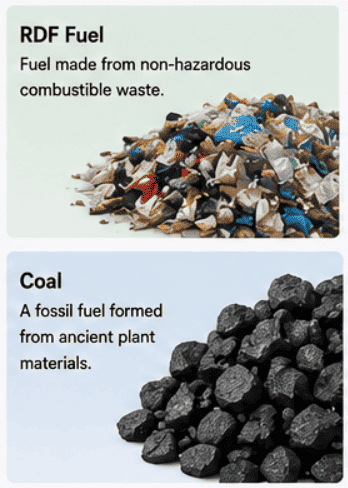
El RDF es un combustible producido a partir de residuos combustibles no peligrosos que, de otro modo, acabarían en los vertederos.
Materia prima típica para RDF
Entre los materiales habituales de RDF se incluyen:
- Residuos plásticos
- Papel usado
- Cartón
- Textiles
- Residuos de envases
- Residuos sólidos urbanos (RSU)
¿Qué es el carbón?
El carbón es un combustible fósil formado a partir de restos vegetales antiguos a lo largo de millones de años.
Sigue siendo uno de los combustibles más utilizados para:
- Generación de energía
- Producción de cemento
- Calefacción industrial
- Procesos metalúrgicos
¿Cómo funciona la producción de RDF?
El RDF se produce mediante procesos de clasificación, trituración, cribado, secado y control de calidad.
Proceso de producción de RDF
Paso 1: Recogida de residuos
Los residuos combustibles se recogen de fuentes municipales e industriales.
Paso 2: Clasificación
Se retiran los materiales reciclables y no combustibles.
Paso 3: Trituración
Los residuos se reducen a un tamaño de partícula uniforme mediante trituradoras industriales.
Paso 4: Selección
Se separan los contaminantes finos y los materiales inertes.
Paso 5: Secado
Se reduce el contenido de humedad para mejorar la calidad del combustible.
Paso 6: Producción de RDF
El material procesado se convierte en RDF apto para la combustión industrial.
Principales parámetros técnicos
Comparación entre el RDF y el carbón
| Parámetro | Combustible RDF | Carbón |
| Fuente | Residuos | Combustible fósil |
| Poder calorífico | 12–25 MJ/kg | 20-35 MJ/kg |
| Contenido de humedad | 10–25% | 5–15% |
| Contenido en cenizas | 5–20% | 5–30% |
| Huella de carbono | Inferior | Más alto |
| Contenido renovable | Parcial | Ninguno |
| Reducción de residuos destinados al vertedero | Sí | No |
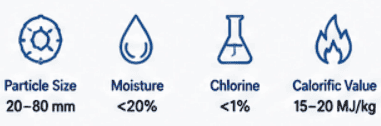
Indicadores típicos de calidad de RDF
| Parámetro | Rango típico |
| Tamaño de las partículas | 20–80 mm |
| Contenido de humedad | <20% |
| Contenido de cloro | <1% |
| Poder calorífico | 15-20 MJ/kg |
Ventajas del reciclado de PET
1. Conservación de los recursos
Reduce la dependencia de los plásticos vírgenes.
2. Menores emisiones de carbono
Consume menos energía que la producción de PET virgen.
3. Reducción de residuos en vertederos
Desvía los residuos plásticos de los vertederos.
4. Apoyo a la economía circular
Permite la reutilización repetida del material.
5. Creación de valor económico
Genera ingresos a partir de los materiales recuperados.
Ventajas del combustible RDF
1. Reducción de los residuos que van a parar al vertedero
RDF transforma los residuos combustibles en una valiosa fuente de energía.
2. Menores emisiones de carbono
En general, el RDF genera menos emisiones netas de gases de efecto invernadero que el carbón.
3. Apoya la economía circular
Los residuos se recuperan y se aprovechan, en lugar de desecharse.
4. Suministro de combustibles alternativos
Contribuye a reducir la dependencia de los combustibles fósiles.
5. Posibles ahorros en los costes
Los costes de combustible pueden reducirse en función de la disponibilidad local de residuos.
Problemas comunes
Calidad irregular del combustible
La composición del RDF puede variar en función de las fuentes de residuos.
Alto contenido de humedad
El exceso de humedad reduce el poder calorífico.
Contaminación por cloro
La contaminación por PVC puede aumentar los niveles de cloro.
Retos relacionados con el almacenamiento
Un almacenamiento inadecuado puede provocar la absorción de humedad.
Soluciones
Mejorar la clasificación de residuos
Retira los materiales no combustibles y los que no sean adecuados antes del procesamiento.
Instalar sistemas de trituración eficientes
Producir partículas de RDF de tamaño uniforme.
Optimizar los procesos de secado
Reduzca el contenido de humedad antes del almacenamiento.
Aplicar el control de calidad
Comprueba periódicamente:
- Humedad
- Valor calorífico
- Contenido en cenizas
- Contenido de cloro
Combustible RDF frente al carbón: ¿cuál es mejor?
En cuanto a la densidad energética
Ganador: Carbón
El carbón suele ofrecer un poder calorífico mayor y más estable.
En cuanto al desempeño medioambiental
Ganador: RDF
El RDF contribuye a reducir los residuos que van a parar al vertedero y a disminuir las emisiones de carbono.
Por la sostenibilidad
Ganador: RDF
El RDF contribuye a los objetivos de recuperación de residuos y de economía circular.
Para garantizar la uniformidad del combustible
Ganador: Carbón
La calidad del carbón suele ser más predecible.
Para futuras normativas
Ganador: RDF
Muchos sectores están aumentando el uso de los RDF para cumplir los objetivos de sostenibilidad.
PREGUNTAS FRECUENTES
¿Qué significa RDF?
RDF son las siglas de «combustible derivado de residuos».
¿Puede el RDF sustituir por completo al carbón?
En algunas aplicaciones, el RDF puede sustituir al carbón de forma parcial o sustancial, dependiendo del diseño del sistema.
¿En qué sectores se utiliza el RDF?
Fábricas de cemento, centrales eléctricas, calderas industriales e instalaciones de valorización energética de residuos.
¿Es renovable el RDF?
El RDF contiene componentes tanto renovables como no renovables.
¿Cuál es el poder calorífico del RDF?
Normalmente, entre 12 y 25 MJ/kg.
¿Reduce el RDF las emisiones de carbono?
En general, sí, en comparación con los combustibles fósiles tradicionales.
¿Por qué es importante la trituración en la producción de RDF?
La trituración permite obtener partículas de tamaño uniforme y mejora la eficiencia de la combustión.
Conclusión
El carbón sigue ofreciendo una alta densidad energética y un rendimiento estable como combustible, pero el RDF presenta importantes ventajas medioambientales y de sostenibilidad. Para las industrias que buscan reducir los residuos destinados a vertedero, disminuir las emisiones de carbono y mejorar la recuperación de recursos, el RDF se está convirtiendo en un combustible alternativo cada vez más importante. La mejor solución suele consistir en una combinación de RDF y combustibles convencionales, en función de los requisitos operativos.
Streamline Eco Tech Solución
Streamline Eco Tech ofrece soluciones integrales para la producción de RDF destinadas a aplicaciones de valorización energética de residuos y de combustibles alternativos.
Nuestros sistemas incluyen:
- Trituradoras de doble eje
- Líneas de procesamiento de RDF
- Sistemas de clasificación de residuos
- Equipos de cribado
- Soluciones de secado
Recursos relacionados:
https://slecotech.com/double-shaft-shredder/
Mediante la integración de tecnologías avanzadas de trituración y preparación de combustible derivado de residuos (RDF), Streamline Eco Tech ayuda a los clientes a convertir los residuos en un combustible valioso, al tiempo que contribuye a los objetivos de sostenibilidad.