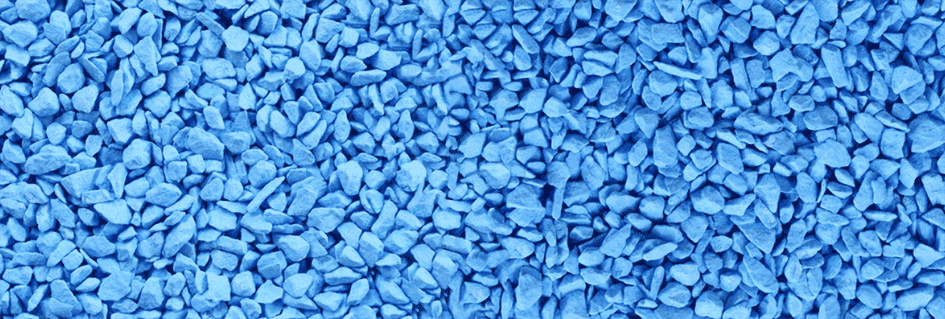

The global production of plastic products has exceeded 400 million tons annually, with injection molding widely applied in the automotive, electronics, packaging, and medical industries. During injection molding, large volumes of sprue and runner waste are generated. Without efficient recycling, these materials not only lead to resource waste but also increase solid waste disposal costs and environmental burdens.
The core of constructing a “zero-waste injection molding factory” lies in developing an advanced internal recycling system for sprue waste. Current global research trends emphasize closed-loop recycling and zero-waste manufacturing as key pathways toward sustainable industrial transformation.
Characteristics of Injection Molding Waste and Recycling Requirements
Sprue waste generated in injection molding processes exhibits the following characteristics:
- Diverse material compositions (ABS, PP, PC, PA, etc.) with high reuse potential.
- Irregular shapes and large volumes requiring preliminary shredding or crushingbefore reprocessing.
- Minimal contamination, making it ideal for in-factory recycling.
Therefore, the primary prerequisite for internal recycling is efficient and stable mechanical preprocessing of sprue waste.
Streamline Eco Tech: Empowering the Zero-Waste Production System
Within a zero-waste injection molding plant, shredders and crushers serve as the core components of the recycling system.
Shredding and Crushing Modules:
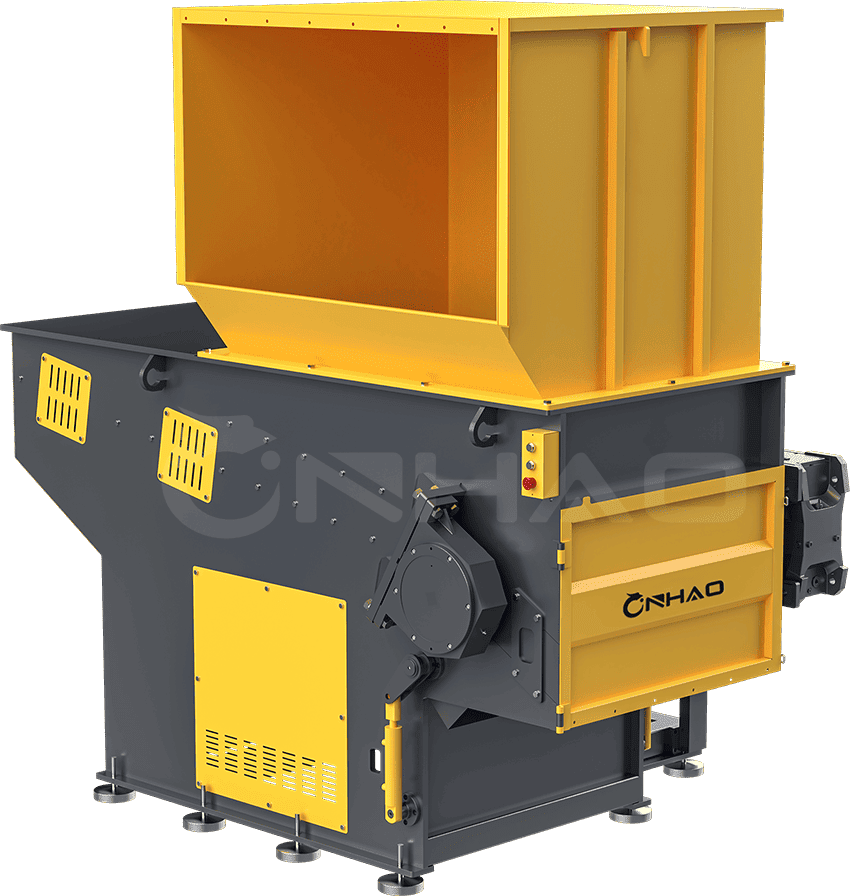
Shredder:
Designed for bulky or thick-walled sprue waste. Its shaft and blade configuration tears large plastic pieces into medium-sized fragments, providing controlled particle size for subsequent crushing. Single-shaft shredders offer high torque, low energy consumption, and strong adaptability.
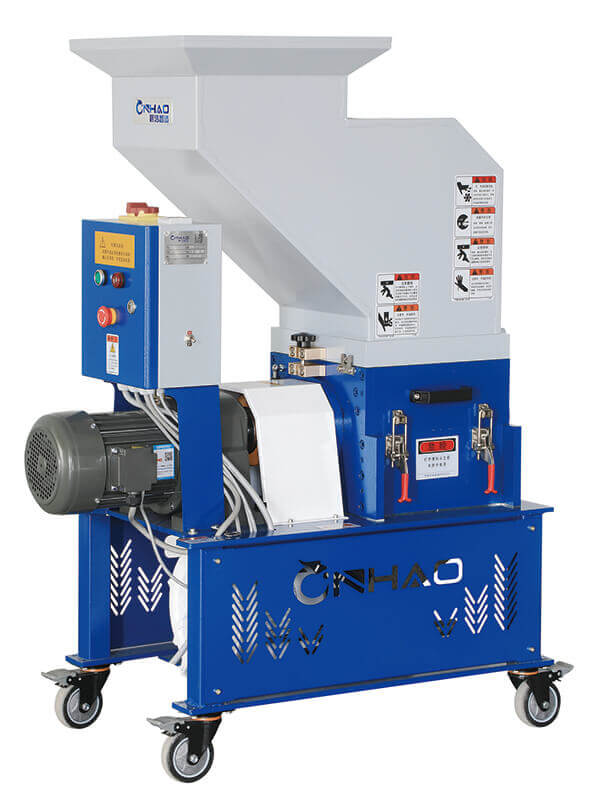
Slow Speed Crusher (Granulator):
Robotic arms automatically feed sprues into the crusher adjacent to the injection molding machine. After shredding, the crusher reduces materials to a size of 5–8 mm. Using a Roots blower, the regrind can be directly conveyed into the injection machine for reuse.
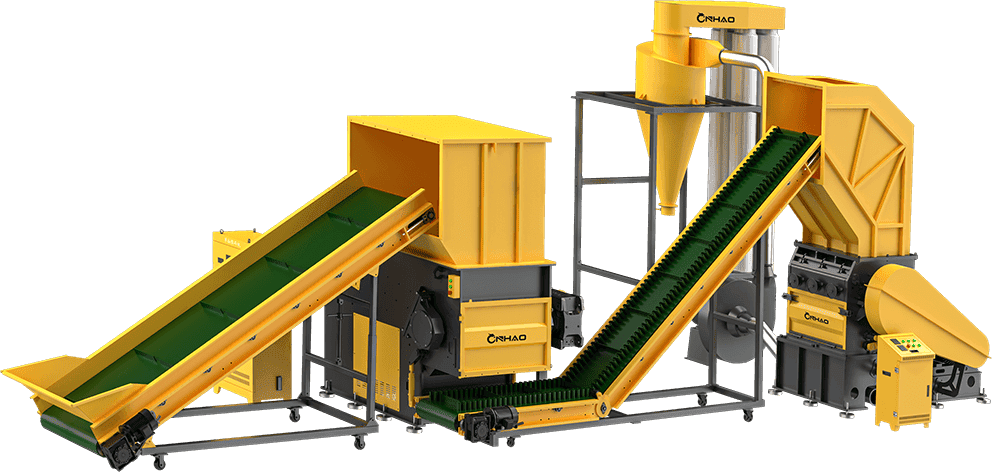
Two Stage Recycling Integration:
A dedicated crushing room can be established in the facility for centralized waste storage and processing. Single-shaft shredders and crushers are arranged in a two-stage modular configuration, connected via automatic conveyors to form a continuous processing line. After dehumidifying and drying, the recycled granules can be blended with virgin materials in controlled ratios for reinjection, achieving zero sprue discharge.
Modern recycling lines can also integrate dust removal and acoustic insulation systems to ensure a clean and quiet production environment.
System Planning and Management Essentials
Modular Layout:
Design crushing, conveying, storage, and drying units as modular subsystems for ease of maintenance and scalability.
Material Traceability:
Utilize MES or ERP systems to record recycling batches and regrind ratios, ensuring traceable and consistent quality.
Energy and Safety Optimization:
Match motor power between shredders and crushers, apply variable frequency drives, and incorporate jam-prevention sensors.
Intelligent Energy Management:
Implement AI-based monitoring and remote control of the cooling water system. During winter, waste heat from equipment can be transferred to heating-demand areas or reused for indoor climate control, enabling energy recirculation within the plant.
From Waste to Value: The Sustainable Path of Injection Molding
Streamline Eco Tech provides comprehensive, customized zero-waste injection molding factory solutions for global manufacturers. Building a zero-waste facility is not only an environmental obligation but also a strategic move toward higher competitiveness and sustainable growth in the plastics industry.
Through the scientific planning of internal recycling systems for sprue waste—and the optimal configuration of high-efficiency shredders and crushers—manufacturers can achieve maximum material utilization and significant cost reduction, realizing both economic and environmental benefits while advancing toward the vision of green and intelligent manufacturing.