
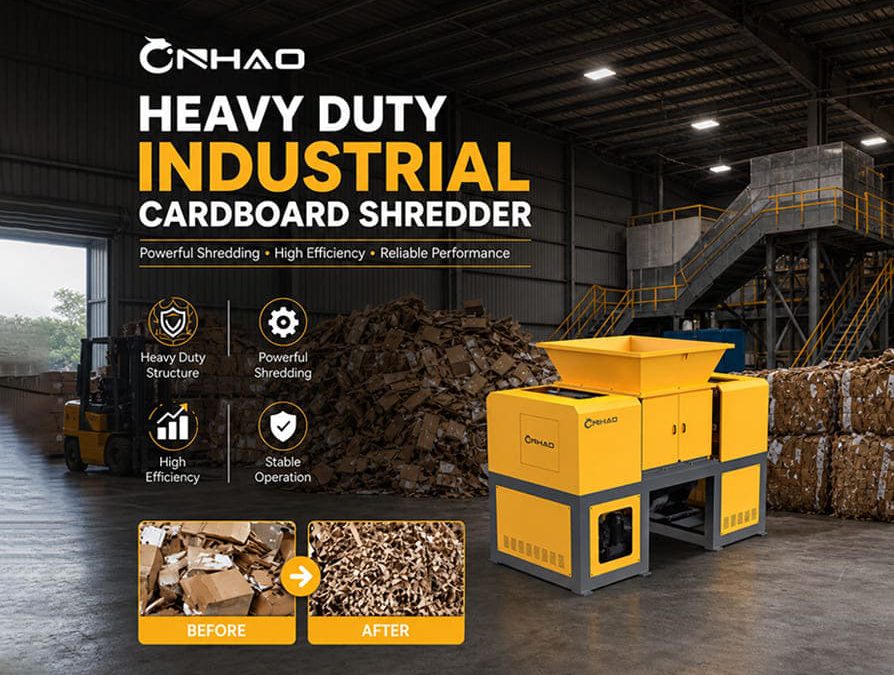
A Kaksoisroottorinen silppuri is a low-speed, high-torque shredding machine designed to process cardboard boxes, corrugated paper, confidential documents, and paper packaging waste. Unlike a dual-shaft shredder, a double rotor shredder uses synchronized crushing rollers to tear and size-reduce materials with lower dust generation and more uniform output. It is widely used in recycling facilities, logistics centers, paper mills, and secure document destruction operations to reduce waste volume and improve downstream recycling efficiency.
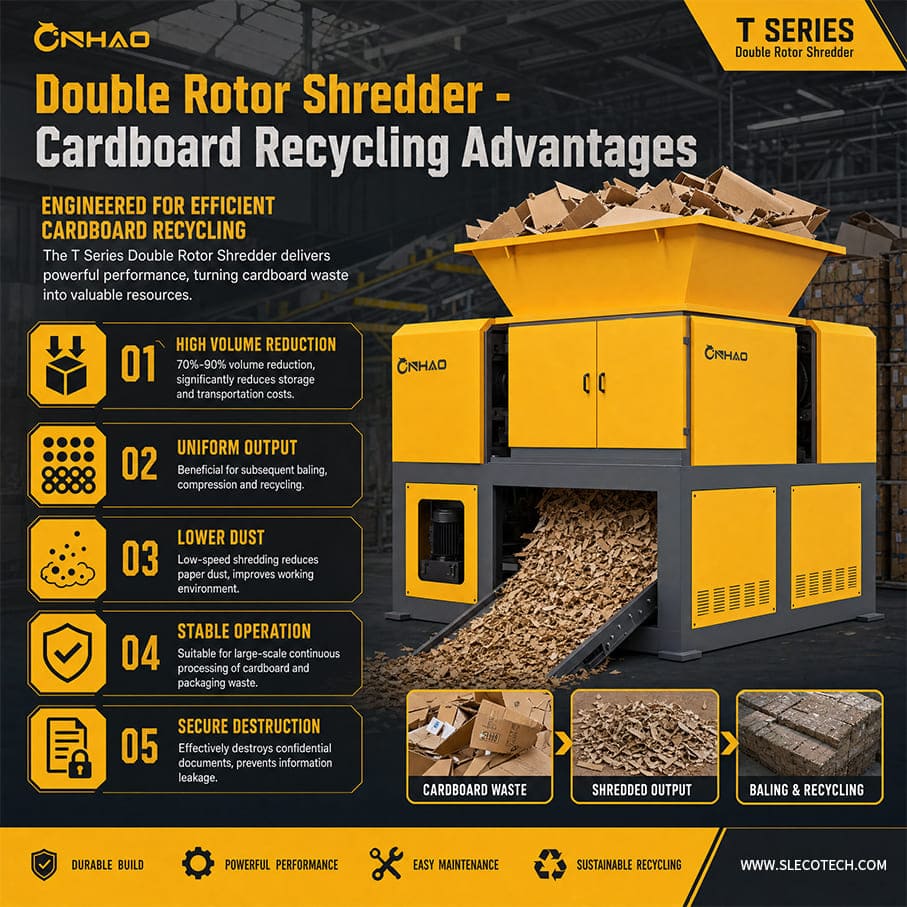
What Is a Double Rotor Shredder?
A double rotor shredder is a specialized machine for shredding cardboard and paper-based waste into manageable sizes for recycling or disposal.
A Kaksoisroottorinen silppuri consists of two heavy-duty crushing rollers that rotate toward each other to grip, compress, and tear materials. The design is particularly suitable for:
- Corrugated cardboard boxes
- Carton packaging waste
- Luottamukselliset asiakirjat
- Paper cores and tubes
- Office paper waste
- Mixed paper recyclables
Unlike a Dual-Shaft Shredder, which uses intermeshing cutting blades mounted on shafts, a Double Rotor Shredder relies on crushing and tearing action through roller structures optimized for paper and packaging materials.
How Does a Double Rotor Shredder Work?
The machine reduces cardboard volume through continuous feeding, compression, tearing, and discharge.
Process Flow
| Step | Prosessi | Toiminto |
| 1 | Ruokinta | Cardboard enters the hopper |
| 2 | Material Gripping | Rotors pull material inward |
| 3 | Compression | Material density increases |
| 4 | Repiminen | Cardboard is shredded |
| 5 | Vastuuvapaus | Uniform shredded output exits |
Typical Operating Parameters
| Parametri | Tyypillinen kantama |
| Roottorin kierrosnopeus | 10–30 RPM |
| Kapasiteetti | 500–5000 kg/h |
| Moottorin teho | 22–110 kW |
| Lähtökoko | 20–100 mm |
| Noise Level | <85 dB |
Actual specifications depend on material density and system configuration.
Double Rotor Shredder vs Dual-Shaft Shredder
Both machines reduce waste volume, but their working principles and applications differ significantly.
| Feature | Kaksoisroottorinen silppuri | Dual-Shaft Shredder |
| Working Method | Compression & Tearing | Cutting & Shearing |
| Main Material | Cardboard, Paper | Plastic, Metal, Wood |
| Dust Generation | Alempi | Medium |
| Output Uniformity | Better for Paper | Kohtalainen |
| Confidential Destruction | Excellent | Good |
| Energy Consumption | Alempi | Korkeampi |
For cardboard recycling and document destruction, double rotor shredders are often a more specialized solution.
Common Problems in Cardboard Shredding
Most operational issues originate from improper feeding or material contamination.
Common Issues
| Problem | Cause |
| Rotor blockage | Excessive feeding |
| Uneven output | Mixed material sizes |
| Pienentynyt läpimenokapasiteetti | Worn rotor surfaces |
| High power consumption | Overloaded hopper |
| Liiallinen pöly | Dry and brittle paper |
Ratkaisut
Routine maintenance and proper feeding practices improve system stability.
Recommended Actions
- Maintain consistent feed rates.
- Remove metal contaminants before shredding.
- Inspect rotor surfaces regularly.
- Lubricate bearings according to maintenance schedules.
- Install conveyors for continuous feeding.
These measures improve uptime and reduce operating costs.
FAQ
Can a double rotor shredder process confidential documents?
Yes. It can effectively destroy confidential files before recycling.
Is a double rotor shredder suitable for corrugated cardboard?
Yes. Corrugated boxes are among the most common applications.
Does it require pre-cutting?
Generally no. Whole cardboard boxes can usually be fed directly into the machine.
Can it be integrated into recycling lines?
Yes. It is commonly combined with conveyors, balers, and sorting systems.
Streamline Eco Tech -ratkaisu
Streamline Eco Tech provides recycling equipment solutions for cardboard, paper packaging, plastics, PET bottles, industrial waste, and confidential document destruction. Our systems integrate conveyors, shredders, sorting equipment, and downstream recycling technologies to improve material recovery efficiency and support circular economy operations.