
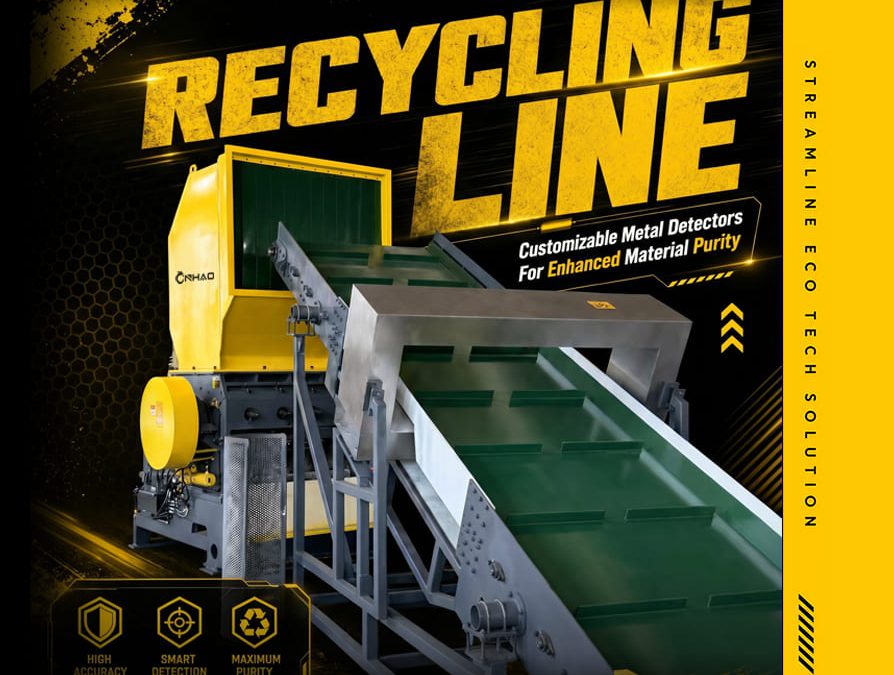
A plastic crushing line is an automated recycling system designed to reduce plastic waste into smaller, uniform flakes for downstream processing. A typical system includes a feeding conveyor, metal detector, plastic crusher, and discharge conveyor. The conveyor transports material continuously, while the metal detector removes metallic contaminants before they enter the crusher. The crusher then cuts and reduces plastic materials into consistent sizes suitable for washing, separation, pelletizing, or reuse. Plastic crushing lines are widely used in PET bottle recycling, HDPE container recycling, film recycling, and industrial plastic waste processing.
Johdanto
Plastic size reduction is one of the most important steps in plastic recycling.
Efficient crushing improves washing performance, material separation, drying efficiency, and pelletizing quality.
Modern recycling plants increasingly use integrated plastic crushing lines instead of standalone crushers to improve automation and productivity.
Mikä on Plastic Crushing Line?
A plastic crushing line is a continuous material processing system that combines feeding, metal detection, crushing, and discharge operations into one integrated recycling solution.
The system is designed to process post-consumer and post-industrial plastic waste into recyclable flakes.
Tyypilliset käsiteltävät materiaalit
- PET-pullot
- HDPE containers
- Plastic drums
- Plastic pallets
- Injection molding scraps
- Plastic sheets
- Muoviputket
- Muoviset kokkareet
- Film rolls
- Industrial plastic waste
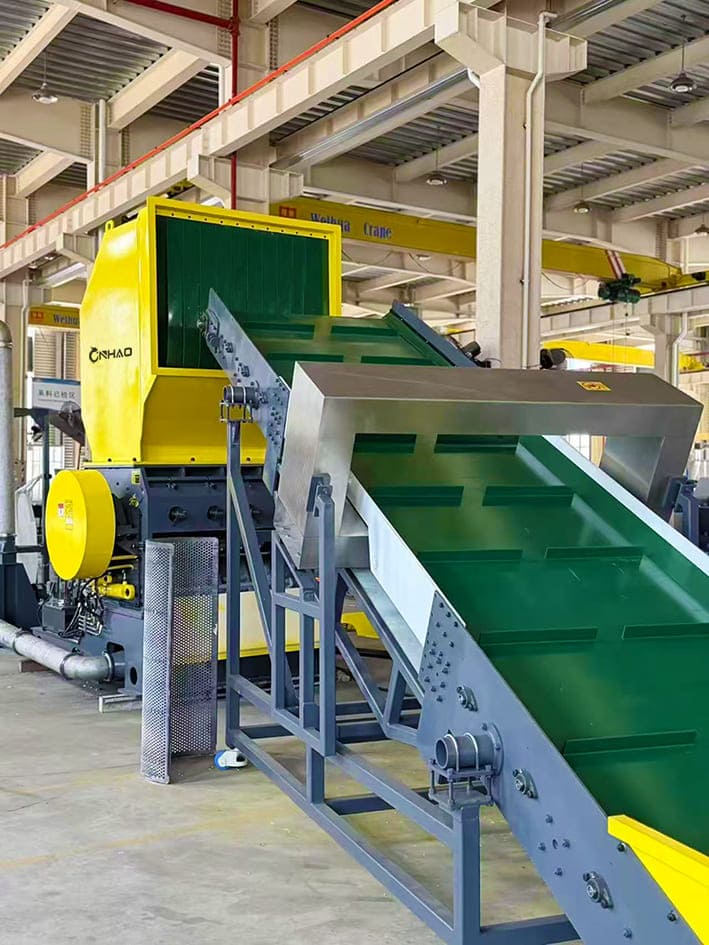
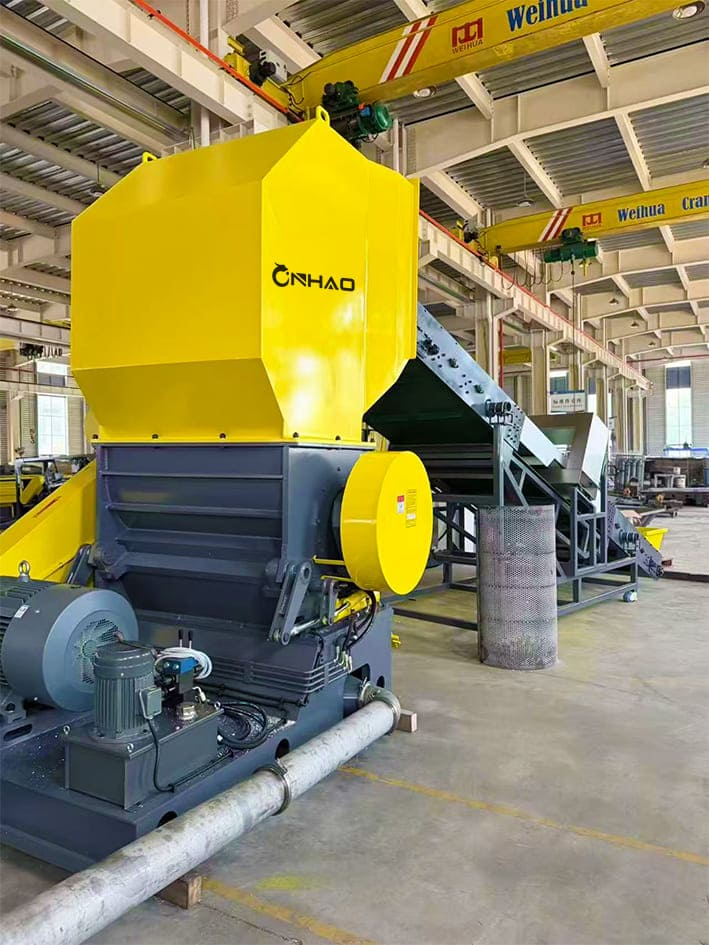
Miten Plastic Crushing Line Työ?
A plastic crushing line automatically feeds, detects contaminants, crushes, and discharges plastic materials in a continuous process.
Vaihe 1: Materiaalin syöttö
Plastic waste is loaded onto a belt conveyor.
The conveyor ensures stable and continuous feeding to maximize throughput.
Step 2: Metal Detection
Before entering the crusher, materials pass through a metal detector.
The detector identifies ferrous and non-ferrous metal contaminants.
Detected metals trigger automatic rejection or machine stop functions.
Step 3: Crushing Process
The crusher uses high-speed rotating blades and fixed knives to cut materials into smaller flakes.
Rotor speeds typically range between:
| Parametri | Typical Value |
| Roottorin kierrosnopeus | 400–600 rpm |
| Moottorin teho | 37–160 kW |
| Lähtökoko | 10–50 mm |
| Kapasiteetti | 500–5000 kg/h |
Step 4: Material Discharge
Crushed flakes pass through a screen and are discharged for further processing.
The material may proceed to:
- Pesujärjestelmät
- Float-sink separation
- Kuivausjärjestelmät
- Pelletizing lines
Key Components Comparison
| Komponentti | Toiminto |
| Belt Conveyor | Material feeding |
| Metal Detector | Contaminant detection |
| Murskain | Size reduction |
| Näyttö | Particle size control |
| Discharge Conveyor | Material transport |
Benefits of a Plastic Crushing Line
Higher Throughput
Automated feeding improves productivity and reduces labor requirements.
Better Equipment Protection
Metal detectors prevent damage to blades, rotors, and bearings.
Consistent Flake Size
Screen-controlled output ensures uniform particle dimensions.
Lower Operating Costs
Reduced downtime improves overall equipment efficiency.
Improved Recycling Quality
Uniform flakes improve washing and separation performance.
Yleisiä ongelmia
Metal Contamination
Hidden metal objects can damage crusher blades.
Terän kuluminen
Continuous operation gradually reduces cutting efficiency.
Material Blockage
Oversized materials may cause feeding interruptions.
Excessive Dust
Dry and brittle plastics may generate dust during crushing.
Ratkaisut
| Problem | Ratkaisu |
| Metal contamination | Install metal detector |
| Terän kuluminen | Regular blade sharpening |
| Material blockage | Control feeding size |
| Dust generation | Dust collection system |
FAQ
What is the purpose of a plastic crushing line?
To reduce plastic waste into flakes for recycling and reprocessing.
Why is a metal detector important?
It protects crusher components from metal damage.
What plastics can be processed?
PET, HDPE, PP, PE, ABS, PVC, and many engineering plastics.
What output size is typical?
Most recycling lines produce 10–50 mm flakes.
Can the system run continuously?
Yes. Industrial systems are designed for continuous operation.
Päätelmä
A plastic crushing line is a critical component of modern recycling systems. By integrating feeding conveyors, metal detectors, crushers, and discharge systems, recyclers can improve productivity, protect equipment, and produce high-quality plastic flakes for downstream processing.
Streamline Eco Tech Ratkaisu
Streamline Eco Tech provides plastic crushing lines, shredding systems, washing lines, and complete recycling solutions for PET bottles, rigid plastics, films, and industrial waste recycling projects. Our systems integrate intelligent feeding, metal detection, and high-efficiency crushing technologies to support reliable recycling operations.