
Blog

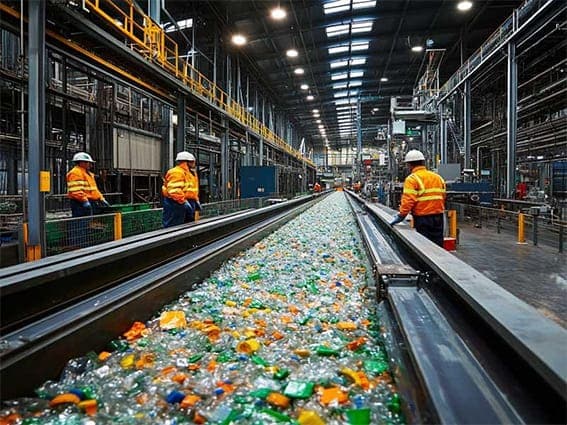
PET Bottle Washing Line: From Bales to Food-Grade Flake (What Actually Happens)
Most PET bottle washing lines underperform for a boring reason. They got spec'd for the wrong bottle. Someone bought a line rated for clean post-industrial scrap, then fed it baled post-consumer bottles with labels, caps, sand, and last month's ketchup still inside....
Plastic Recycling Industry Trends 2026: What Equipment Buyers Need to Know
The plastic recycling industry is undergoing its fastest transformation in decades. The global recycled plastics market — valued at USD 60–86 billion in 2025 — is projected to reach USD 126–190 billion by 2034–2035, growing at a CAGR of 8–10.5%. For equipment buyers,...

Plastic Recycling Equipment Buyer’s Guide: How to Build the Right Line for Your Material
Buying plastic recycling equipment without a clear plan is the most expensive mistake in the industry. You end up with a shredder that cannot handle your contamination level, a crusher that jams on your feed size, or a washing line that cannot hit the purity your...

Dual-Shaft Shredder for E-Waste Recycling: Complete Guide to WEEE Processing
Electronic waste is the fastest-growing waste stream on the planet. A dual-shaft shredder (also called a double shaft shredder) tears e-waste between two counter-rotating shafts at low speed and high torque — safely destroying hard drives, circuit boards, and whole...
HDPE Bottle Recycling: Complete Process from Bales to Pellets
HDPE bottle recycling converts post-consumer milk jugs, detergent bottles, and rigid containers into clean recycled pellets ready for manufacturing. As one of the most widely recycled plastics worldwide, HDPE (#2) offers excellent recyclability — it floats in water for easy separation, tolerates mul…