

A plastic washing line is one of the most important systems in plastic recycling. Its primary function is to remove contaminants such as dirt, labels, adhesives, oils, organic residues, and other impurities from post-consumer and post-industrial plastic waste.
A properly designed washing line improves material purity, increases recycled plastic value, and ensures stable downstream processing such as extrusion and pelletizing.

What Is a Plastic Washing Line?
A plastic washing line is an integrated recycling system designed to clean, separate, and prepare waste plastics for further processing.
The system combines mechanical cleaning, friction washing, density separation, hot washing, rinsing, and drying technologies to produce high-quality recycled plastic flakes.
Common Materials Processed
Plastic washing lines are widely used for:
- PET bottles
- HDPE bottles
- LDPE films
- PP woven bags
- Agricultural films
- Rigid plastic containers
- Household plastic waste
- Industrial plastic scrap
Why Is Plastic Washing Important?
The quality of recycled plastic depends heavily on washing efficiency.
Insufficient cleaning can lead to:
- Black spots
- Gel formation
- Odor issues
- Color contamination
- Reduced mechanical properties
- Extrusion instability
Effective washing improves product quality and increases the market value of recycled materials.

How Does a Plastic Washing Line Work?
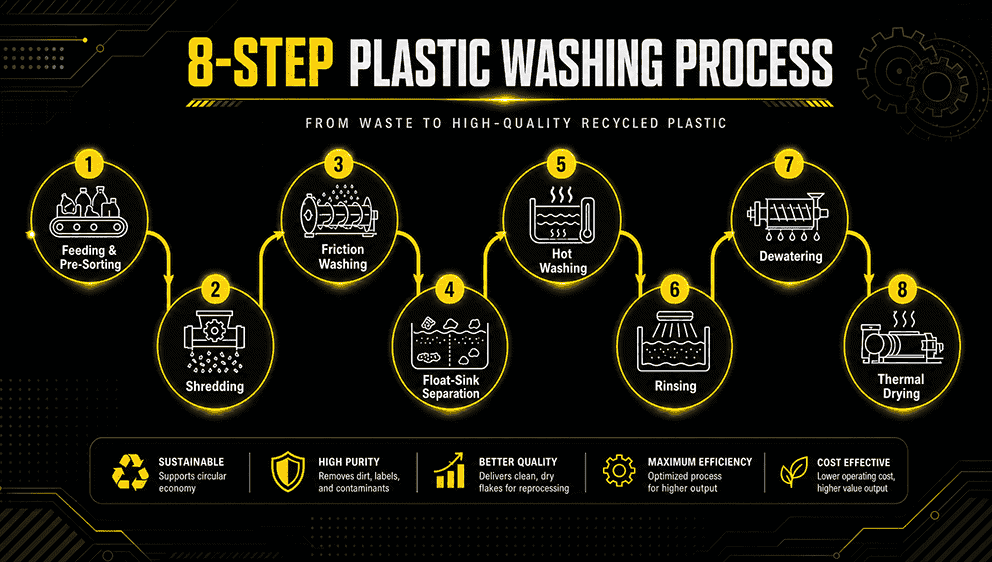
Step 1: Feeding and Pre-Sorting
Plastic waste is fed into the system and manually or automatically sorted.
Contaminants such as metals, stones, glass, and oversized materials are removed before washing.
Step 2: Shredding or Crushing
The material is reduced in size using shredders or crushers.
Smaller particle sizes improve washing efficiency and contaminant removal.
Typical output size:
- PET flakes: 12–16 mm
- Film flakes: 30–50 mm
Step 3: Friction Washing
High-speed friction washers remove:
- Surface dirt
- Sand
- Paper fibers
- Food residues
Mechanical friction helps loosen contaminants attached to the plastic surface.
Step 4: Float-Sink Separation
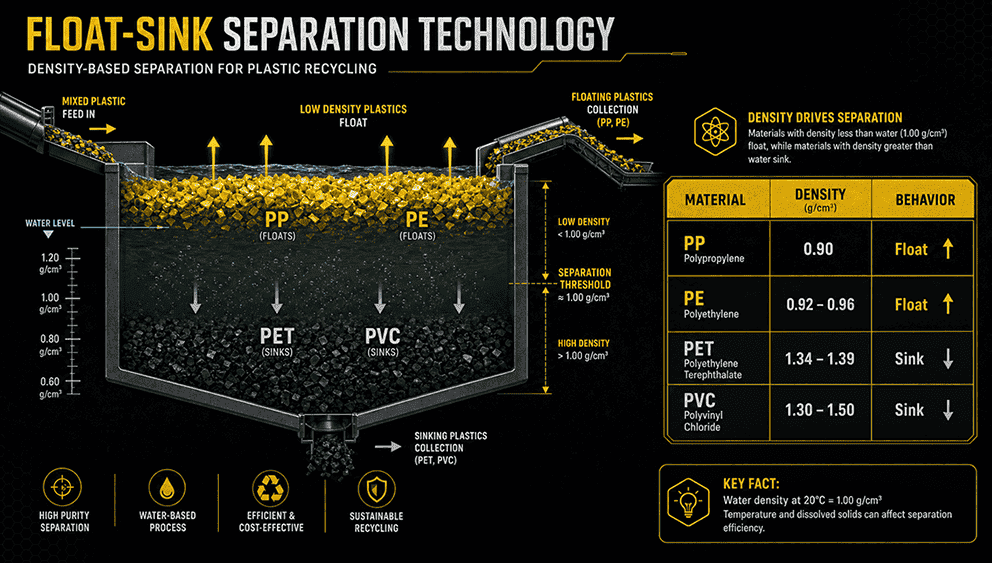
Water-based separation tanks utilize density differences between materials.
Examples:
| Material | Density | Behavior |
| PP | 0.90 g/cm³ | Float |
| PE | 0.92–0.96 g/cm³ | Float |
| PET | 1.34–1.39 g/cm³ | Sink |
| PVC | 1.30–1.50 g/cm³ | Sink |
This process improves material purity significantly.
Step 5: Hot Washing
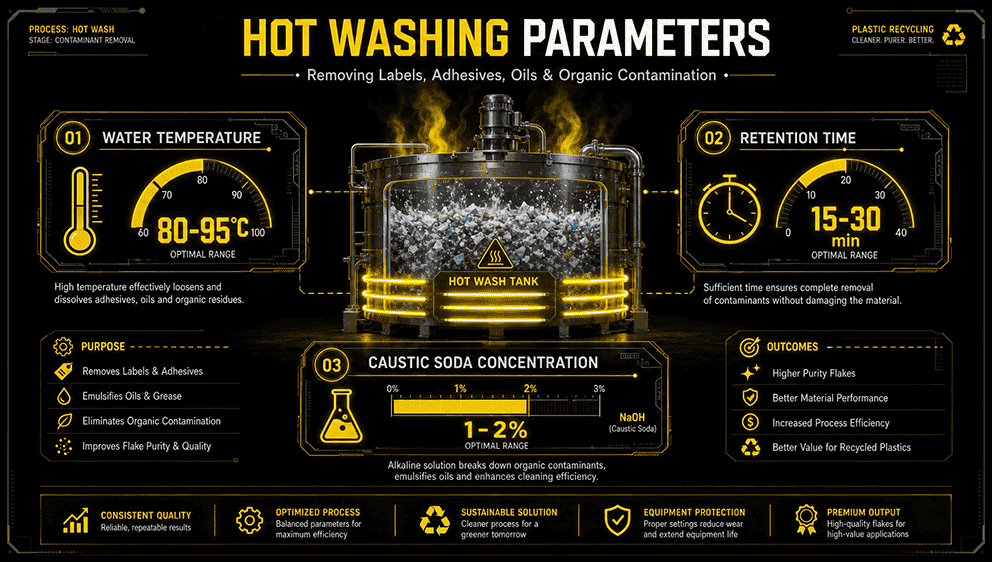
Hot washing removes:
- Labels
- Adhesives
- Oils
- Organic contamination
Typical parameters:
| Parameter | Range |
| Water Temperature | 80–95°C |
| Retention Time | 15–30 min |
| Caustic Soda Concentration | 1–2% |
Hot washing is especially important for food-grade PET recycling.
Step 6: Rinsing
Clean water rinses away residual chemicals and contaminants.
Multiple rinsing stages are often used to achieve higher cleanliness standards.
Step 7: Dewatering
Mechanical dewatering systems remove free moisture.
Typical moisture content after dewatering:
- 15–25%
Common equipment:
- Centrifugal dewatering machines
- Screw presses
Step 8: Thermal Drying
Hot-air drying systems further reduce moisture content.
Typical final moisture levels:
| Material | Final Moisture |
| PET Flakes | ≤1% |
| PE/PP Flakes | ≤2% |
Proper drying is critical for stable extrusion performance.
Key Equipment in a Plastic Washing Line
| Process | Equipment |
| Feeding | Conveyor System |
| Size Reduction | Shredder / Crusher |
| Washing | Friction Washer |
| Separation | Float-Sink Tank |
| Hot Cleaning | Hot Washer |
| Rinsing | Rinse Tank |
| Dewatering | Dewatering Machine |
| Drying | Thermal Dryer |
Benefits of a Plastic Washing Line
Higher Material Purity
Removes contaminants and improves recyclate quality.
Increased Product Value
Cleaner materials achieve higher market prices.
Better Extrusion Performance
Reduces defects during pelletizing and molding.
Compliance with Recycling Standards
Supports food-contact and high-quality recycling applications.
Improved Resource Recovery
Maximizes recycling efficiency and material utilization.
Common Problems in Plastic Washing
Excessive Contamination
Heavy contamination reduces washing efficiency.
Poor Separation Performance
Mixed plastics lower product purity.
High Moisture Content
Insufficient drying affects extrusion quality.
High Water Consumption
Inefficient systems increase operating costs.
Solutions
Multi-Stage Washing Systems
Improve cleaning effectiveness.
Advanced Density Separation
Enhance material purity.
Efficient Water Recycling
Reduce fresh water consumption.
Optimized Drying Technology
Lower final moisture levels.
Conclusion
A plastic washing line is essential for producing high-quality recycled plastics. Through shredding, washing, separation, rinsing, and drying, contaminated plastic waste can be transformed into clean, valuable raw materials suitable for reuse.
The effectiveness of the washing process directly influences material quality, extrusion stability, and recycling profitability.
Streamline Eco Tech Solution
Streamline Eco Tech provides complete plastic washing and recycling solutions for PET bottles, PE films, PP woven bags, rigid plastics, and post-consumer plastic waste.
Our systems include:
- Plastic Washing Lines
- Single Shaft Shredders
- Industrial Crushers
- Friction Washing Systems
- Hot Washing Systems
- Drying Systems
Related Resources:
https://slecotech.com/product/single-shaft-shredder/
Streamline Eco Tech helps recyclers improve material quality, increase recovery rates, and optimize recycling operations.
Frequently Asked Questions
What is a PET washing line and what does it do?
A PET washing line cleans post-consumer bottles into hot-washed flakes ready for pelletising. Stages typically include label removal, cold and hot washing, friction scrubbing, rinsing, separation and drying.
Hot washing vs cold washing – which do I need?
Hot washing with caustic better removes glues, oils and residues and is preferred for food-grade or high-value PET. Cold washing uses less energy and suits lighter contamination. The right choice depends on your input and end market.
What contaminants must a washing line remove?
Labels and glue, food and oil residues, caps and rings, and foreign plastics or metals. Good lines combine washing, density separation and metal removal to hit flake purity specs.