

Globally, over 1.5 billion waste tires (exceeding 50 million metric tons) are generated annually, primarily from tire replacements of private vehicles, trucks, buses, & construction machinery. With the continuous growth of the global vehicle fleet, waste tire volumes are rising. Effective management of this solid waste poses a global environmental challenge. However, their inherent resource value—rubber, steel wires, and high calorific value—offers significant potential for resource recovery.

Resource Utilization Methods for Waste Tires
- Pyrolysis
- Process: Thermal decomposition at high temperatures (400–800°C) in an oxygen-free or inert gas environment.
- Outputs: ◦ Fuel oil (40%) ◦ Carbon black (30%) ◦ Steel wires (20%) ◦ Combustible gas (10%)
- Applications: Industrial fuel, rubber products, and metallurgical raw materials.
- Requirements: Relies on fully enclosed, environmentally compliant industrial systems to strictly control emissions of hazardous substances (e.g., dioxins) and ensure environmental safety.
- Tire Retreading
- Process: Professional assessment and retreading of truck/engineering tires with intact carcasses.
- Output: Retreaded tires directly re-enter use, significantly reducing raw material and energy consumption compared to new tire production.

- Mechanical Processing (Crushing & Separation)
- Core Equipment: Double Shaft shredder
Waste tires → steel wire removal → Coarse shredding → Fine grinding → Multi-stage separation( fiber extraction, magnetic sorting)
- Products and Applications:
◦ Tire-Derived Aggregate/Fuel (TDA/TDF): High-calorific solid fuel (~80–90% of coal’s energy value), used for co-processing in cement kilns, power plants, paper mills, and steel furnaces for clean energy substitution.
◦ Crumb Rubber / Rubber Granules: Raw material for rubber mats, sports tracks, artificial turf, rubber-modified asphalt, mudguards, shoe soles, and other rubber-plastic products.

Intelligent Resource Recovery System Solutions
Streamline Eco Tech’s integrated system includes Double Shaft shredder, crusher, steel-wire separator, magnetic sorter, and fiber-sorting unit, with a central smart control system:
- Automation: Enables continuous operation, enhancing efficiency while reducing labor costs and operational risks.
- Precision Control: Adjusts particle size distribution to meet specific requirements (e.g., TDF fuel, asphalt-modified rubber powder, fine reclaimed rubber powder).
- High-Efficiency Separation: Maximizes recovery rates and purity of rubber, steel, and fiber components.
- Customization: Adaptable configurations for varying scales and output targets.
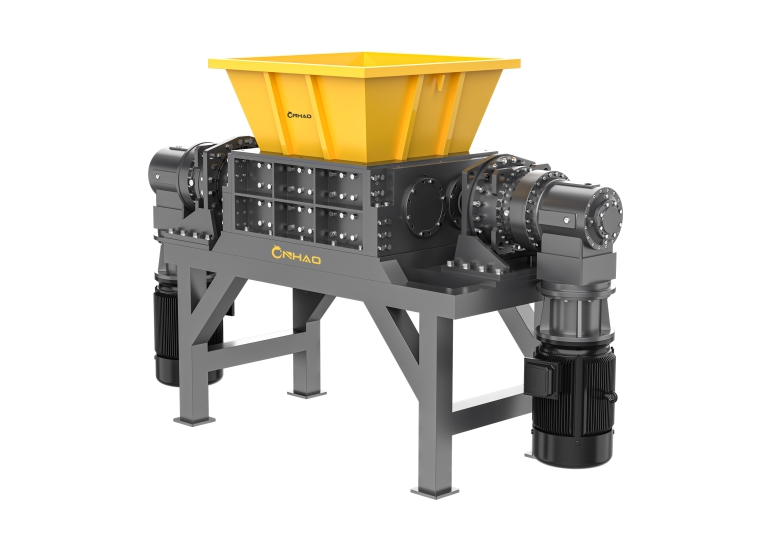
Double-Shaft-Shredder
Core Role of Double Shaft Shredders
As the primary processing stage:
- Robust Coarse Shredding: Equipped with alloy blades and counter-rotating shafts for uniform output.
- High Adaptability: Processes steel-belted tires directly and withstands overload impacts.
- Efficient Pre-treatment: Increases material surface area, significantly improving downstream wire separation and grinding efficiency.
- Smart Controls: Hydraulic system with overload protection, real-time speed/torque adjustment.
Frequently Asked Questions
What equipment does SLECOTECH manufacture?
SLECOTECH builds shredders, crushers and washing/recycling lines for plastics, wood, rubber, paper and MSW recovery, and configures them to your material and capacity.
How do I choose the right recycling machine?
Match the machine to your feed and goal: single shaft for uniform flakes, twin-shaft for tough objects, double rotor for high-volume light waste, pipe shredder for long pipe. Our engineers help size the line.
Does SLECOTECH provide complete recycling lines?
Yes. Shredders and crushers are typically paired with washing, sorting and pelletising stages into an integrated line designed around your material and target output.