
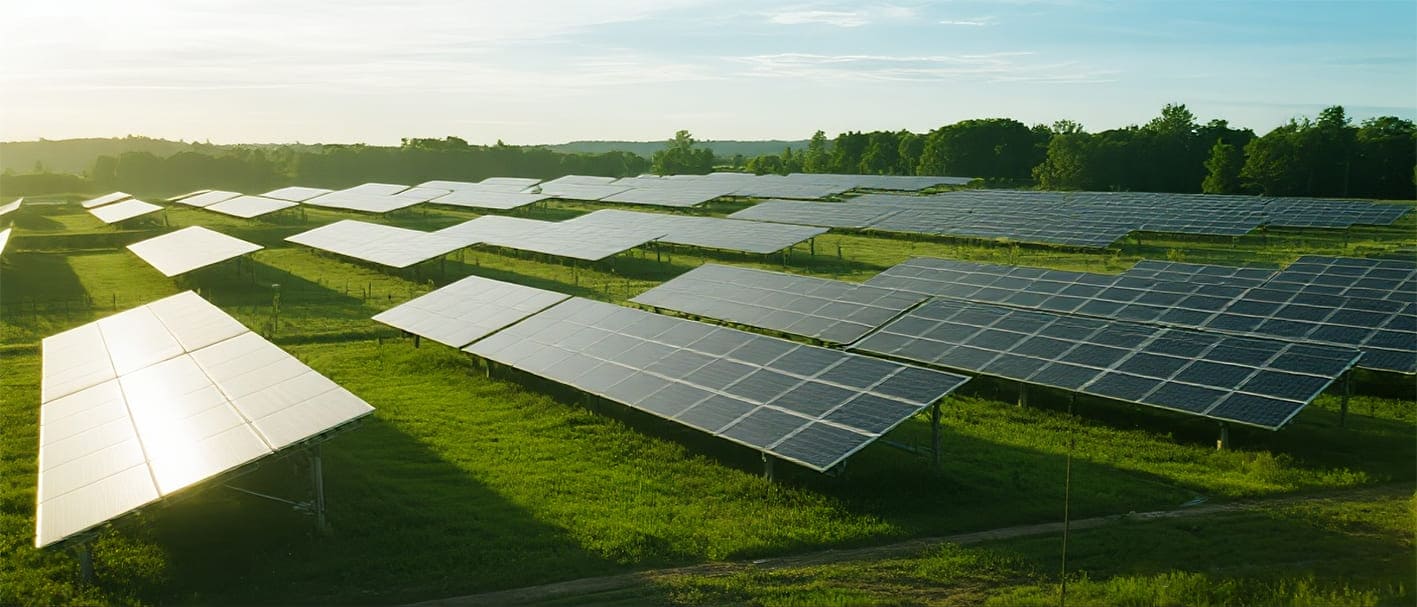
As global attention to climate change intensifies and carbon neutrality strategies advance, solar energy has become a cornerstone of the global clean energy agenda. As a clean and renewable energy source, it plays a key role in the energy transition.

- According to data published by the American Chemical Society (ACS Publications), global photovoltaic (PV) installed capacity increased from 4 GW in 2000to 760 GW in 2020, accounting for nearly 4% of global electricity generation. (Bibliography)
- According to data from Our World in Databased on statistics from IRENA, global cumulative installed solar capacity reached 1,422 GW by the end of 2023. (Bibliography)
- The International Energy Agency’s Photovoltaic Power Systems Programme (IEA-PVPS)reported that, by the end of 2024, global cumulative solar capacity had reached approximately 2,246 GW (2.25 TW). (Bibliography)
- Projections from Elsevier (ScienceDirect)estimate that global installed solar capacity will exceed 5,000 GW by 2050. (Bibliography)
With an average operational lifespan of 20 – 30 years, early PV systems installed in the 2000s are expected to enter large-scale decommissioning between 2025–2035. By 2050, global PV waste may exceed 78 million metric tons, raising major challenges in resource recovery, environmental management, and policy regulation. (Bibliography)
.png.webp)
Challenges & Environmental Risks in Solar Panel Recycling
Recycling Challenges
- Complex structure: Photovoltaic panels consist of aluminum alloy frames, tempered glass, silicon-based solar cells, EVA encapsulants, polymer back sheets, and trace amounts of precious metals (e.g., silver), making material separation technically difficult.
- Neglected high-value materials: Most current recycling processes recover only aluminum and glass—accounting for roughly 80% of panel mass—while valuable materials such as silver, copper, and silicon are often discarded or lost during processing.
- Tightly bonded encapsulants: EVA layers are chemically cross-linked and difficult to delaminate, complicating disassembly and increasing processing costs.
- Toxic components: Legacy modules may contain hazardous substances such as lead and cadmium, which pose contamination risks to soil and water if improperly handled.
- Low manual efficiency: Manual dismantling is labor-intensive, costly, and unsuitable for large-scale operations.
Low Recycling Rates & Environmental Risks
- In the United States, only around 10%of decommissioned PV panels are recycled; the majority are landfilled or incinerated.
- Leaching of heavy metalsfrom untreated panels can result in long-term ecological damage and pose risks to human health.
.jpg)
Technical & Economic Bottlenecks in PV Module Recycling
| Method | Advantages | Limitations |
| Mechanical | Low cost, simple operation | Incomplete separation, low material purity |
| Thermal (Pyrolysis) | Effective encapsulant removal | High energy consumption, equipment-intensive |
| Chemical | High recovery rate, good material purity | Expensive, difficult pollution control |
View methods
Process Challenges & Long-Term Barriers
| Category | Current Issues | Ongoing Challenges |
| Separation Process | Complex material composition; difficult to disassemble | Still dependent on manual or costly precision sorting |
| Thermal Efficiency | Traditional equipment wears out quickly | Ineffective for high-volume, high-hardness modules |
| Cost Management | High integrated costs (dismantling, transport, sorting) | Low profit margin; weak market-driven incentives |
Research indicates that recycling a crystalline silicon PV module costs approximately $15–45, while landfill disposal costs just $1–5. The lack of economic incentives has become one of the key barriers to the development of a global PV recycling system. (Bibliography)
.png.webp)
Shredding Recycling Solution: The Central Role of Double shaft shredder
During the pre-treatment stage, twin-shaft shredders serve as a critical technology to enable efficient material recovery.
- High torque & low speed: Minimizes dust generation and reduces wear on equipment.
- Versatile adaptability: Capable of shredding multilayer composite structures such as glass, metal frames, and polymer films.
- Uniform output size: Facilitates downstream separation processes including magnetic, air, and eddy current sorting.

Core Equipment Configuration
| Component | Function Description |
| Double shaft shredder | Primary shredding with particle size width of 40–60 mm |
| Intelligent Control System (PLC) | Auto-reverse/Anti-jam mechanism/Overheat |
| Wear-resistant alloy blades | D2 alloy steel or custom hard alloy |
Optional Auxiliary Equipment (to optimize recovery efficiency)
| Auxiliary Equipment | Function |
| Crusher | Further reduces material to target size (10–50 mm) |
| Magnetic Separator | Extracts ferromagnetic metals (e.g., steel frames, screws) |
| Eddy Current Separator | Sorts non-ferrous metals (e.g., aluminum, copper, silver) |
| Conveyor Belt | PVC or metal chain type; auto-feeding and discharge speed control |
| Dust Collection System | Prevents airborne pollution and secondary environmental risks |
| Vibrating Screen + Air Classifier | Separates lightweight materials (plastics, EVA fragments) from glass |
Strategic Pillars for Building a Global PV Recycling System: Technology, Policy, & Collaboration
As the global solar sector approaches a wave of PV module decommissioning, the world faces pressing environmental and resource challenges. Serving as a critical front-end solution, Double shaft shredder enhance processing efficiency and enable the recovery of high-value materials. Countries should strengthen policy frameworks, invest in recycling technology, and build robust collection and recovery systems to realize the full circular potential of green energy.

Additional notes:
Recyclable Materials in PV Modules
Material Component | Weight Share | Recyclable Value | Application / Notes |
| Glass | ~70% | Moderate | Can be recycled into secondary glass or building materials |
| Aluminum Frame | ~10% | High | Remelted for reuse; high economic value |
| Silicon Cells | ~5–6% | Relatively High | High-purity silicon can be purified and reused |
| Silver (Electrodes) | ~0.05% | Very High | High-value metal for resale or remanufacturing |
| Copper (Wires) | ~1% | High | Recoverable via smelting |
| EVA/Backsheet Plastics | ~10% | Limited | Difficult to reuse; thermal recovery or chemical cracking |
| Lead/Cadmium/Chromium/Nickel | ~<0.1% | Hazardous | Non-recyclable; must be contained to prevent leakage |
Diverse Revenue Pathways in PV Recycling
| Revenue Source | Description |
| Material Sales Revenue | Key: aluminum frames (~60–70% of value); secondary: copper/silver |
| Government Subsidies | Carbon credits or financial incentives in many countries |
| Corporate ESG Branding | Participation enhances manufacturers’ ESG ratings and green credentials |
| Material Circularity | Recycled materials can be reintroduced into new PV production (closed-loop) |
Frequently Asked Questions
What are the main steps in plastic recycling?
Collection and sorting, size reduction (shredding then granulating), washing, separation by density/type, drying and finally pelletising or direct reuse as regrind.
Why shred plastic before washing?
Shredding increases surface area and unlocks trapped contaminants, making washing and separation far more effective and raising final flake purity.
What is regrind and how is it used?
Regrind is the uniform flake produced by a granulator from clean plastic scrap. It is fed straight back into extrusion or blending, closing the loop on in-house scrap.