

A metal detector installed before a plastic crusher helps identify ferrous and non-ferrous metal contaminants before they enter the crushing chamber. Metal contamination can damage crusher blades, rotors, screens, and bearings, leading to costly downtime and maintenance. By integrating a metal detector into a plastic crushing line, recycling facilities can improve equipment protection, reduce operating costs, increase system reliability, and maintain consistent production quality. Metal detection is now considered a standard practice in modern plastic recycling operations.
Einleitung
Metal contamination is one of the most common causes of crusher damage in plastic recycling plants.
Hidden screws, bolts, metal inserts, wires, and steel fragments often enter recycling streams with plastic waste.
Installing a metal detector before the crusher significantly reduces these risks and improves operational efficiency.

What Is a Metal Detector in a Plastic Crushing Line?
A metal detector is an inspection device that detects metallic contaminants within plastic materials before they enter downstream processing equipment.
The system continuously monitors material flow on the conveyor and triggers an alarm, automatic rejection, or emergency stop when metal is detected.
Common Metals Detected
- Eisen
- Stahl
- Stainless steel
- Kupfer
- Aluminium
- Messing
- Metal screws
- Metal inserts
- Electrical wires
How Does a Metal Detector Work?
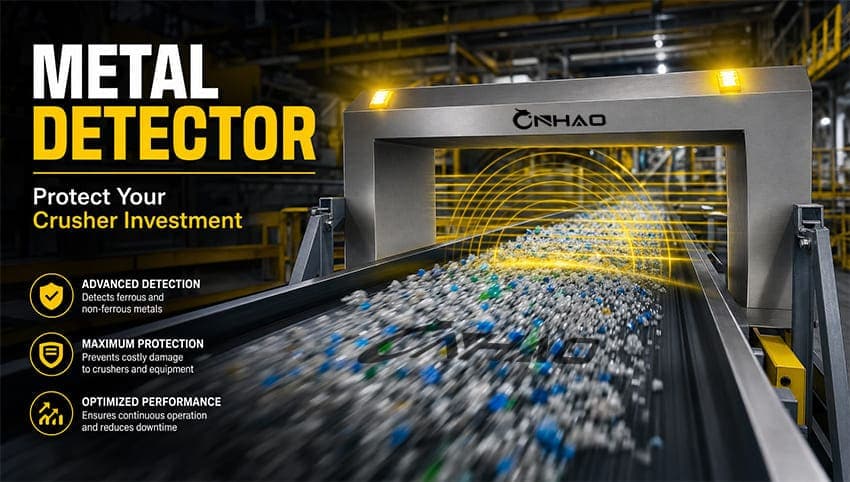
A metal detector scans materials moving on a conveyor and identifies metallic contaminants using electromagnetic sensing technology.

Step 1: Material Conveying
Plastic waste is transported through the conveyor toward the crusher.
Materials may include rigid plastics, PET bottles, plastic drums, and industrial scrap.
Step 2: Electromagnetic Detection
The detector generates an electromagnetic field around the conveyor.
When a metal object passes through the field, the signal changes and is immediately detected.
Step 3: Alarm or Automatic Protection
After detecting metal contamination, the system can:
- Trigger an alarm
- Stop the conveyor
- Stop the crusher
- Activate an automatic rejection mechanism
This prevents metal from reaching the crushing chamber.
Why Is Metal Detection Important?
Protects Crusher Blades
Metal objects can chip, crack, or break cutting blades.
Blade replacement is one of the most expensive
maintenance items in crushing operations.
Prevents Rotor Damage
Large metal pieces may damage the rotor assembly
and shaft components.
Rotor repairs often require extended downtime.
Protects Bearings and Screens
Metal contamination can damage bearings, screens, and internal wear parts.
This increases maintenance frequency and operating costs.
Improves Production Stability
Removing contaminants reduces unexpected shutdowns and improves line efficiency.

Typische technische Parameter
| Parameter | Typischer Bereich |
| Conveyor Width | 600–2000 mm |
| Detection Sensitivity | 0.5–5 mm |
| Betriebsgeschwindigkeit | 0.2–2.0 m/s |
| Protection Rating | IP65–IP67 |
| Detection Type | Ferrous & Non-Ferrous |
Metal Detector vs No Metal Detector
| Funktion | With Metal Detector | Without Metal Detector |
| Geräteschutz | Ausgezeichnet | Begrenzt |
| Blade Life | Longer | Shorter |
| Maintenance Cost | Nach unten | Höher |
| Ausfallrisiko | Niedrig | Hoch |
| Production Stability | Hoch | Mäßig |
Lösungen
| Problem | Lösung |
| False alarms | Proper calibration |
| Missed detection | Regular testing |
| Conveyor issues | Alignment inspection |
| Dust contamination | Routine cleaning |

FAQ
Can a metal detector detect stainless steel?
Yes. Modern industrial metal detectors can detect most stainless steel contaminants.
What happens when metal is detected?
The system can stop the conveyor, stop the crusher, or reject the contaminated material.
Is metal detection necessary for PET bottle recycling?
Yes. PET recycling streams often contain bottle caps, wires, and metal contaminants.
Can metal detectors detect aluminum?
Yes. Most industrial systems detect both ferrous and non-ferrous metals.
Does metal detection improve crusher lifespan?
Yes. It significantly reduces blade and rotor damage.
Schlussfolgerung
Installing a metal detector before a plastic crusher is a practical and cost-effective way to protect recycling equipment. By preventing metal contamination from entering the crusher, recycling facilities can reduce maintenance costs, improve productivity, and extend equipment service life.
Stromlinie Eco Tech Lösung
Streamline Eco Tech integrates intelligent metal detection systems into plastic crushing lines, PET recycling systems, and industrial recycling equipment. Our solutions help customers protect critical components, reduce downtime, and improve operational efficiency across a wide range of recycling applications.
Häufig gestellte Fragen
Was ist der Unterschied zwischen einem Brecher und einem Schredder?
Ein Schredder zerkleinert sperriges Material bei niedriger Drehzahl grob; ein Brecher (Granulator) zermahlt es bei hoher Drehzahl fein zu gleichmäßigen Flocken, die anschließend gewaschen oder extrudiert werden können. Diese Geräte werden in der Regel zusammen eingesetzt.
Kann ein Kunststoffzerkleinerer sowohl Hartkunststoff als auch Folie verarbeiten?
Ja, mit der richtigen Rotor- und Messerkonfiguration. Hartkunststoff und Folie erfordern unterschiedliche Klingengeometrien; geben Sie daher bei der Bestellung bitte Ihr Hauptmaterial an.
Wie wird die Flockengröße in einem Granulator geregelt?
Ein Auslaufsieb bestimmt die Flockengröße; kleinere Maschenweiten ergeben feineren Mahlgut, jedoch einen geringeren Durchsatz. Die Siebe werden je nach Ihren Wasch- oder Extrusionsspezifikationen ausgetauscht.