

A metal detector installed before a plastic crusher helps identify ferrous and non-ferrous metal contaminants before they enter the crushing chamber. Metal contamination can damage crusher blades, rotors, screens, and bearings, leading to costly downtime and maintenance. By integrating a metal detector into a plastic crushing line, recycling facilities can improve equipment protection, reduce operating costs, increase system reliability, and maintain consistent production quality. Metal detection is now considered a standard practice in modern plastic recycling operations.
Введение
Metal contamination is one of the most common causes of crusher damage in plastic recycling plants.
Hidden screws, bolts, metal inserts, wires, and steel fragments often enter recycling streams with plastic waste.
Installing a metal detector before the crusher significantly reduces these risks and improves operational efficiency.

What Is a Metal Detector in a Plastic Crushing Line?
A metal detector is an inspection device that detects metallic contaminants within plastic materials before they enter downstream processing equipment.
The system continuously monitors material flow on the conveyor and triggers an alarm, automatic rejection, or emergency stop when metal is detected.
Common Metals Detected
- Железо
- Сталь
- Stainless steel
- Медь
- Алюминий
- Латунь
- Metal screws
- Metal inserts
- Electrical wires
How Does a Metal Detector Work?
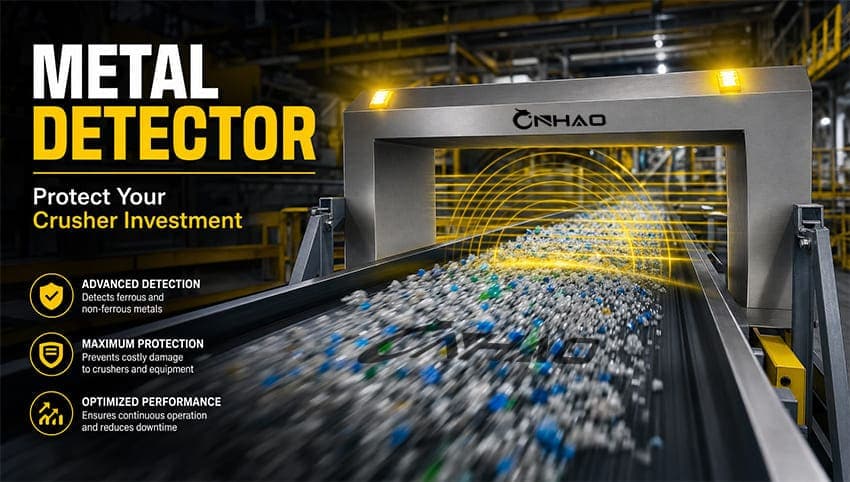
A metal detector scans materials moving on a conveyor and identifies metallic contaminants using electromagnetic sensing technology.

Step 1: Material Conveying
Plastic waste is transported through the conveyor toward the crusher.
Materials may include rigid plastics, PET bottles, plastic drums, and industrial scrap.
Step 2: Electromagnetic Detection
The detector generates an electromagnetic field around the conveyor.
When a metal object passes through the field, the signal changes and is immediately detected.
Step 3: Alarm or Automatic Protection
After detecting metal contamination, the system can:
- Trigger an alarm
- Stop the conveyor
- Stop the crusher
- Activate an automatic rejection mechanism
This prevents metal from reaching the crushing chamber.
Why Is Metal Detection Important?
Protects Crusher Blades
Metal objects can chip, crack, or break cutting blades.
Blade replacement is one of the most expensive
maintenance items in crushing operations.
Prevents Rotor Damage
Large metal pieces may damage the rotor assembly
and shaft components.
Rotor repairs often require extended downtime.
Protects Bearings and Screens
Metal contamination can damage bearings, screens, and internal wear parts.
This increases maintenance frequency and operating costs.
Improves Production Stability
Removing contaminants reduces unexpected shutdowns and improves line efficiency.

Типовые технические характеристики
| Параметр | Типичный диапазон |
| Conveyor Width | 600–2000 mm |
| Detection Sensitivity | 0.5–5 mm |
| Рабочая скорость | 0.2–2.0 m/s |
| Protection Rating | IP65–IP67 |
| Detection Type | Ferrous & Non-Ferrous |
Metal Detector vs No Metal Detector
| Особенность | With Metal Detector | Without Metal Detector |
| Защита оборудования | Отлично | Ограниченный |
| Blade Life | Longer | Shorter |
| Maintenance Cost | Ниже | Выше |
| Риск простоев | Низкий | Высокий |
| Production Stability | Высокий | Умеренный |
Решения
| Задача | Решение |
| False alarms | Proper calibration |
| Missed detection | Regular testing |
| Conveyor issues | Alignment inspection |
| Dust contamination | Routine cleaning |

ЧАСТО ЗАДАВАЕМЫЕ ВОПРОСЫ
Can a metal detector detect stainless steel?
Yes. Modern industrial metal detectors can detect most stainless steel contaminants.
What happens when metal is detected?
The system can stop the conveyor, stop the crusher, or reject the contaminated material.
Is metal detection necessary for PET bottle recycling?
Yes. PET recycling streams often contain bottle caps, wires, and metal contaminants.
Can metal detectors detect aluminum?
Yes. Most industrial systems detect both ferrous and non-ferrous metals.
Does metal detection improve crusher lifespan?
Yes. It significantly reduces blade and rotor damage.
Заключение
Installing a metal detector before a plastic crusher is a practical and cost-effective way to protect recycling equipment. By preventing metal contamination from entering the crusher, recycling facilities can reduce maintenance costs, improve productivity, and extend equipment service life.
Streamline Eco Tech Решение
Streamline Eco Tech integrates intelligent metal detection systems into plastic crushing lines, PET recycling systems, and industrial recycling equipment. Our solutions help customers protect critical components, reduce downtime, and improve operational efficiency across a wide range of recycling applications.
Часто задаваемые вопросы
В чём заключается разница между дробилкой и измельчителем?
Шредер грубо предварительно измельчает объемный материал на низкой скорости; дробилка (гранулятор) мелко измельчает его на высокой скорости до однородных хлопьев для промывки или экструзии. Обычно они работают в паре.
Может ли дробилка для пластика перерабатывать как твёрдый пластик, так и плёнку?
Да, при правильной конфигурации ротора и ножей. Для жесткого пластика и пленки требуются разные геометрии лезвий, поэтому при заказе укажите, какой материал преобладает.
Как регулируется размер хлопьев в грануляторе?
Размер частиц определяется размером ячеек выпускного сита; чем меньше размер ячеек, тем мельче получается переработанный материал, но при этом снижается производительность. Сита заменяются в соответствии с техническими требованиями к промывке или экструзии.