
Quick Answer
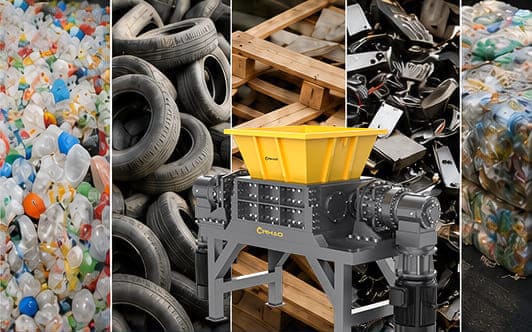
A double shaft shredder is an industrial size reduction machine that uses two counter-rotating shafts equipped with cutting blades to tear, shear, and shred various materials. It is widely used in plastic recycling, tire recycling, municipal solid waste (MSW), electronic waste, RDF production, and industrial waste treatment. Compared with conventional crushers, double shaft shredders provide higher torque, lower operating speed, and better handling of bulky or difficult materials.

Introduction
As global recycling and waste management industries continue to expand, efficient size reduction equipment has become increasingly important.
Among the various recycling machines available today, the double shaft shredder is one of the most widely used solutions for processing large-volume and high-strength waste materials.
Its ability to handle diverse feedstocks makes it a key component in modern recycling systems.
What Is a Double Shaft Shredder?
Definition
A double shaft shredder is a low-speed, high-torque shredding machine consisting of two parallel shafts fitted with interlocking cutting blades.
The machine reduces material size through:
- Cutting
- Shearing
- Tearing
- Crushing
Unlike high-speed granulators, double shaft shredders focus on primary size reduction and are designed to process tough, bulky, or contaminated materials.
Typical Materials Processed
Double shaft shredders are commonly used for:
✅ Industrial Waste ✅ Waste Paper
✅ Automobile Shells ✅ Construction Wood
✅ Large Plastic Products ✅ Plastic Films
✅ RDF Feedstock ✅ Metal Drums
✅ Waste Household Appliances ✅ Tires
✅ Municipal Solid Waste (MSW)
For recycling applications, they are often installed before crushers, granulators, or washing systems.

How Does a Double Shaft Shredder Work?
Conclusion First
A double shaft shredder works by using two slow-speed rotating shafts that pull material into the cutting chamber and reduce it through shearing and tearing action.
Step-by-Step Process
Step 1: Material Feeding
Waste materials are fed into the hopper manually or by conveyor.
Step 2: Material Capture
The rotating blades grip the material and pull it into the cutting zone.
Step 3: Shearing and Tearing
The interlocking knives generate high torque to tear and shear the material into smaller pieces.

Step 4: Discharge
Processed material exits through the bottom of the shredding chamber.
Step 5: Secondary Processing
The shredded material may be sent to:
- Crushers
- Granulators
- Washing lines
- RDF systems
Key Technical Parameters

Actual specifications vary depending on material type and project requirements.
Important Performance Indicators
Torque
High torque allows shredding of difficult materials such as tires and thick plastics.
Throughput
Determines production capacity and system efficiency.
Blade Material
Common blade materials include:
- D2 tool steel
- SKD11 steel
- Alloy steel
Output Size
Can be adjusted through blade configuration and screen design.
Benefits of Double Shaft Shredders
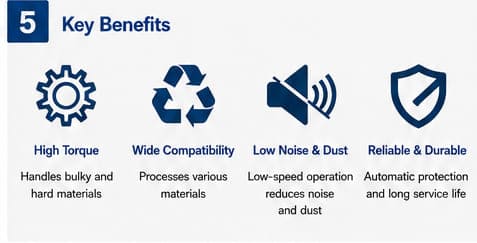
1. High Torque Performance
Suitable for processing bulky and hard materials.
2. Wide Material Compatibility
Can handle mixed waste streams and various recyclable materials.
3. Low Dust Generation
Low-speed operation minimizes dust emissions.
4. Lower Noise Levels
Operating speeds are significantly lower than conventional crushers.
5. Improved Equipment Protection
Automatic reverse systems help prevent overload and blade damage.
6. Reduced Maintenance Costs
Durable blades and low-speed operation extend machine life.
Common Problems

Blade Wear
Continuous operation causes blade edges to become dull.
Impact
- Reduced efficiency
- Increased energy consumption
Material Jamming
Large or irregular materials may become trapped.
Impact
- Reduced throughput
- Motor overload
Bearing Failure
Insufficient lubrication can cause premature bearing wear.
Impact
- Downtime
- Higher maintenance costs
Overheating
Excessive load may increase motor temperature.
Impact
- Reduced equipment lifespan
Solutions

Regular Blade Maintenance
Inspect and sharpen blades periodically.
Install Automatic Reverse Function
Allows the machine to clear blockages automatically.
Proper Material Feeding
Avoid overloading the hopper.
Preventive Maintenance Program
Regular inspection of:
- Bearings
- Hydraulic systems
- Gearboxes
- Electrical components
Double Shaft Shredder vs Crusher

FAQ
What is the main purpose of a double shaft shredder?
It is used for primary size reduction of bulky waste materials before further recycling processes.
What materials can a double shaft shredder process?
Plastics, tires, wood, metals, electronic waste, RDF feedstock, and municipal solid waste.
What is the difference between a single shaft and a double shaft shredder?
Single shaft shredders use one rotor and a screen for controlled particle size, while double shaft shredders focus on high-torque primary shredding.
How long do shredder blades last?
Blade lifespan depends on material type and operating conditions, typically ranging from several months to several years.
Is a double shaft shredder suitable for plastic recycling?
Yes. It is widely used for shredding plastic films, PET bottles, HDPE containers, pipes, and industrial plastic waste.
Can a double shaft shredder be used for RDF production?
Yes. Double shaft shredders are commonly used as the primary shredding equipment in RDF processing lines.
Conclusion
A double shaft shredder is one of the most important machines in modern waste recycling and resource recovery systems. Its high torque, low-speed operation, and ability to process a wide range of materials make it an ideal solution for plastic recycling, RDF production, tire recycling, and industrial waste treatment.
Selecting the appropriate machine based on material characteristics, throughput requirements, and downstream processing needs is essential for achieving optimal performance and operating efficiency.
Streamline Eco Tech Solution
Streamline Eco Tech provides advanced double shaft shredding solutions for plastic recycling, RDF production, municipal solid waste processing, and industrial waste management.
Our shredders are engineered for high efficiency, reliable operation, and long service life, helping recycling facilities improve material recovery and reduce operational costs.
Learn more about our shredding and recycling solutions at:
- https://slecotech.com/product/double-shaft-shredder/
- https://slecotech.com/blog/
- https://slecotech.com/

Frequently Asked Questions
What is the difference between single shaft and double shaft shredders?
Single shaft shredders produce uniform, controllable flakes and suit cleaner, homogenous feeds. Double shaft (twin-shaft) machines use high torque to tear tough, mixed or bulky materials where throughput matters more than particle consistency.
How do I size a shredder for my material?
Consider feed form (bulky, long, tangling), hardness, target output size and downstream process. Pipe needs a horizontal pipe shredder; film and fibre favour a screen-less double rotor; rigid plastic and wood suit a single shaft unit.
What should I look for in a shredder for recycling?
Look for overload protection with auto-reverse, quick-change blades, a discharge screen for output control, and safety guards. These features cut downtime and keep the line running safely.