

O que é a reciclagem de película plástica?
A reciclagem de películas plásticas é o processo de transformação de resíduos de películas plásticas em matérias-primas reutilizáveis através da redução do tamanho, lavagem, separação, secagem e peletização.
Entre os materiais comuns de película recicláveis incluem-se:
- LDPE (polietileno de baixa densidade)
- LLDPE (polietileno linear de baixa densidade)
- Película de HDPE
- Película agrícola
- Filme extensível
- Película de embalagem
- Sacos de compras
- Sacos de PP trançados
O objetivo é recuperar flocos ou grânulos de plástico limpos, adequados para o fabrico de novos produtos, apoiando iniciativas de economia circular e reduzindo a deposição em aterros.
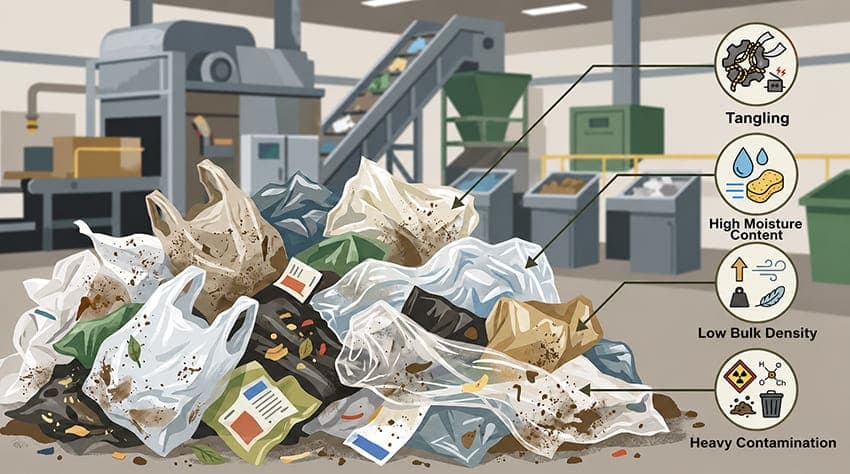
Por que razão a reciclagem de película plástica é um desafio
Em comparação com os plásticos rígidos e as garrafas de PET, as películas de plástico apresentam dificuldades específicas em termos de reciclagem:
- Elevados níveis de contaminação
- Leve e de baixa densidade aparente
- Retenção de humidade
- Emaranhamento durante a alimentação
- Solo, areia e resíduos orgânicos
Os filmes agrícolas e os filmes de embalagem pós-consumo requerem frequentemente uma lavagem e secagem intensivas antes do reprocessamento.
Processo padrão de reciclagem de película plástica
Passo 1: Recolha e triagem
Os resíduos de película são recolhidos em:
- Fluxos de resíduos urbanos
- Resíduos da produção industrial
- Aplicações agrícolas
- Resíduos de embalagens comerciais
A ordenação elimina:
· PET · PVC · Metais
· Pedras · Contaminantes orgânicos
A classificação dos materiais melhora a eficiência nas fases posteriores do processo e a qualidade do produto.
Passo 2: Trituração e moagem
A primeira fase de tratamento mecânico reduz o tamanho do material.
O equipamento inclui normalmente:
- Triturador de eixo único
- Triturador de duplo eixo
- Triturador de plástico
A trituração aumenta a área de superfície e permite uma lavagem mais eficaz. No caso de fardos de película fortemente compactados, é comum utilizar trituradores antes dos esmagadores.
Passo 3: Lavagem por fricção e separação por densidade
Esta etapa elimina:
- Solo
- Areia
- Etiquetas
- Resíduos orgânicos
- Adesivos
As lavadoras por fricção de alta velocidade geram uma ação de esfregamento mecânico, enquanto os tanques de afundamento e flutuação separam os contaminantes com base nas diferenças de densidade.
Passo 4: Desidratação e secagem
Os materiais fotográficos retêm uma quantidade significativa de humidade após a lavagem.
Os sistemas de secagem típicos incluem:
- Máquinas centrífugas de desaguamento
- Secadores por espremedura
- Secadores de ar quente
O teor de humidade pretendido é, geralmente, inferior a 5% antes da peletização.
Passo 5: Peletização
As escamas de película limpas e secas são derretidas e filtradas através de um sistema de extrusão.
O processo de peletização:
- Elimina os contaminantes residuais
- Estabiliza as propriedades do material
- Produz pellets reciclados uniformes
Estes pellets podem ser utilizados em:
- Produção cinematográfica
- Moldagem por injeção
- Moldagem por sopro
- Produtos de extrusão

Equipamento essencial numa linha de reciclagem de película plástica
Uma unidade típica de reciclagem de película inclui:
- Transportador de alimentação 6. Sistema de secagem
- Triturador/Moinho 7. Linha de peletização
- Arruela de fricção 8. Silo de armazenamento
- Tanque de afundamento e flutuação 9. Sistema de controlo inteligente
- Máquina de desidratação
A configuração do equipamento depende dos níveis de contaminação, do tipo de material e da capacidade de produção.

Conclusão
A reciclagem de película plástica é uma componente essencial dos sistemas modernos de economia circular.
Ao combinar tecnologias eficientes de trituração, lavagem, secagem e peletização, as instalações de reciclagem podem transformar resíduos plásticos de baixo valor em matérias-primas secundárias de alta qualidade, reduzindo simultaneamente o impacto ambiental e melhorando a eficiência na utilização dos recursos.
Streamline Eco Tech Soluções para a reciclagem de película plástica
A Streamline Eco Tech é especializada em equipamentos inteligentes de reciclagem para o tratamento de resíduos plásticos e a recuperação de recursos.
As suas soluções de reciclagem de película plástica incluem:
- Trituração de alta eficiência
- Trituração de precisão
- Lavagem avançada
- Tecnologias de poupança de água
- Controlo automatizado de processos
Os sistemas foram concebidos para películas agrícolas, películas de embalagem, sacos tecidos e resíduos plásticos pós-consumo, ajudando as instalações de reciclagem a melhorar as taxas de recuperação e a reduzir os custos operacionais.
Perguntas frequentes
Quais são as principais etapas da reciclagem do plástico?
Recolha e triagem, redução de tamanho (trituração seguida de granulação), lavagem, separação por densidade/tipo, secagem e, por fim, peletização ou reutilização direta como material triturado.
Por que é que se deve triturar o plástico antes de o lavar?
A trituração aumenta a área de superfície e liberta os contaminantes retidos, tornando a lavagem e a separação muito mais eficazes e aumentando a pureza final das escamas.
O que é o material triturado e como é utilizado?
O «Regrind» é o floco uniforme produzido por um granulador a partir de resíduos de plástico limpos. É reintroduzido diretamente no processo de extrusão ou mistura, fechando o ciclo dos resíduos produzidos internamente.